24 Slanted Attic Closet Ideas That Transform Awkward Angles Into Smart Storage
Let’s be honest, slanted attic closets feel like that one drawer in the kitchen where everything goes to die. You open it with hope, stare at the weird angles, and immediately regret your life choices.
Ever noticed how attic spaces promise charm but deliver chaos? Trust me, I’ve stood there holding a sweater, asking myself why gravity and architecture teamed up against me.
Here’s the thing though—those awkward angles aren’t useless, they’re just misunderstood, and honestly, once you work with them instead of fighting them, magic happens.
1. Custom Built-Ins That Hug the Slope
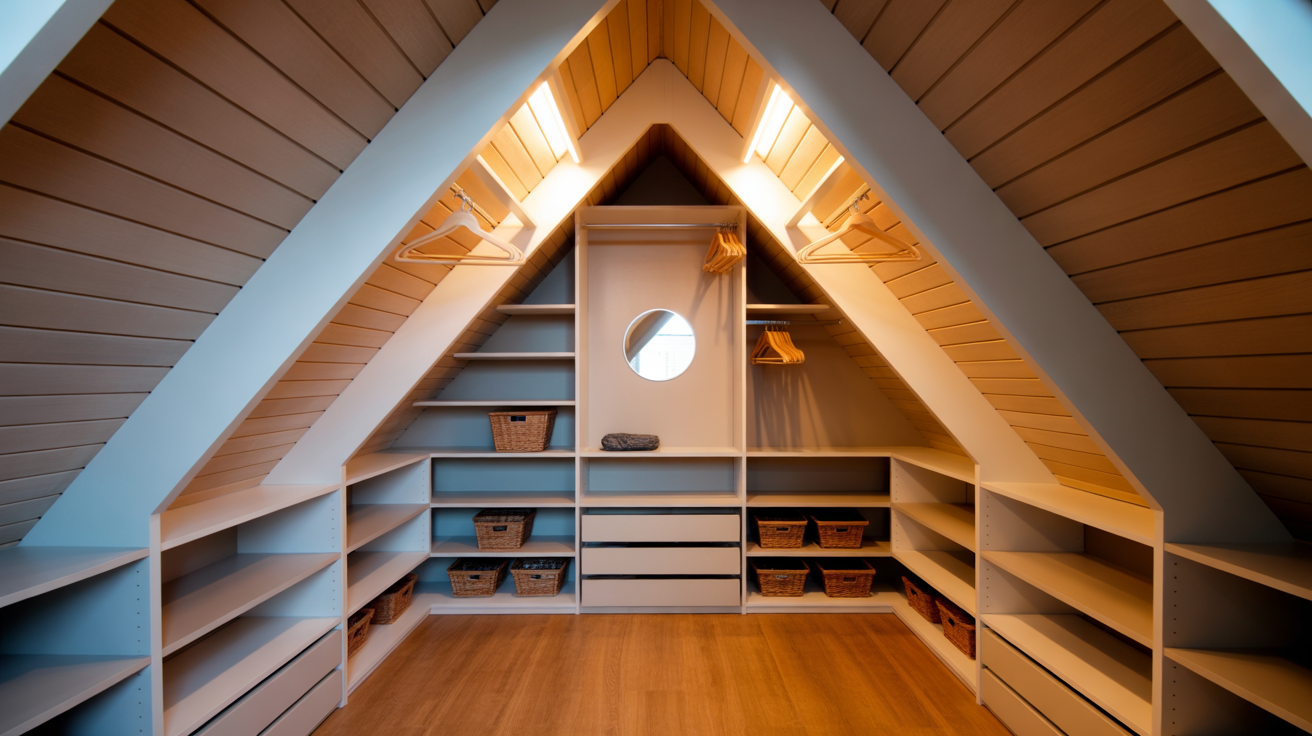
I used to think built-ins were only for people with giant budgets and perfectly square rooms, and wow, I was wrong. Custom shelving that follows the roofline makes the space feel intentional instead of accidental.
Ever wondered why messy attics feel so stressful? It’s because nothing fits, and built-ins fix that instantly. IMO, even shallow shelves along the slope are better than wasted space.
I’ve done this way too many times—ignored the slope and paid for it later. When everything hugs the angle, the closet suddenly feels calm, not chaotic.
2. Low Hanging Rods for Everyday Clothes
Here’s the thing: not everything needs to hang at full height. Slanted ceilings are perfect for shirts, skirts, and kids’ clothes that don’t require runway-level clearance.
I used to stack these in bins and forget they existed, which, tbh, wasn’t ideal. A low rod keeps everything visible and wearable. Ever noticed how you wear what you see? Same logic here.
It’s simple, practical, and way less frustrating than digging through piles.
3. Drawers Where Hanging Won’t Work
When hanging space fails, drawers step in like a reliable best friend. Sloped walls are basically begging for custom drawers underneath. I once shoved random baskets there and called it “organized,” which was a lie.
Drawers keep socks, jeans, and folded items from becoming a fabric avalanche. FYI, soft-close drawers feel fancy even if the rest of the attic doesn’t. This is one of those upgrades you’ll appreciate every single day.
4. Open Shelving for Shoes and Bags
Let’s be honest, shoes hate being crammed into weird corners. Open shelves under a slope keep them accessible and actually visible. I used to forget half my shoes existed, and honestly, that’s tragic.
Slanted shelves let you angle shoes naturally instead of forcing them flat. Ever wondered why some closets feel boutique-like? Visibility is the secret.
This setup makes even an attic closet feel curated instead of cluttered.
5. Pull-Out Storage for Deep Angles
Deep attic corners are the black holes of storage. You put something there, and it’s gone forever. Pull-out drawers or sliding shelves fix that problem instantly. I ignored this once and lost a suitcase for months—true story.
Being able to slide storage out makes everything usable again. IMO, if you can’t reach it easily, it doesn’t count as storage. This idea turns frustration into function.
6. Floor-Level Storage for Seasonal Items
Here’s a confession: I store winter coats way too close to summer clothes every year. Floor-level bins under slanted walls are perfect for off-season items. They stay out of the way but still accessible.
Ever noticed how clutter disappears when it has a proper home? Same concept here. Clear or labeled bins make switching seasons painless. Honestly, it’s a sanity-saver.
7. Angled Shoe Racks That Match the Roof
Straight racks in slanted spaces just look sad. Angled shoe racks follow the roofline and feel intentional. I once forced a normal rack in there, and it leaned like it had given up.
Matching the slope makes the whole closet feel designed, not improvised. Ever wondered why custom spaces feel expensive? It’s all about alignment. This trick is subtle but powerful.
8. Sliding Doors Instead of Swing Doors
Swing doors and slanted ceilings are not friends. Sliding doors save space and your patience. I’ve hit my head way too many times trying to open doors in tight attic closets.
Sliding panels keep things sleek and functional. FYI, mirrored sliders also bounce light around beautifully. This is one of those “why didn’t I do this sooner” ideas.
9. Soft Lighting Along the Slopes
Attic closets can feel like caves, and honestly, no one wants that. LED strip lighting along slanted ceilings adds warmth and visibility. I used to rely on one sad bulb in the center—huge mistake.
Light following the slope makes the space feel taller and intentional. Ever noticed how lighting changes your mood instantly? Same effect here. It’s small effort, big payoff.
10. Hooks for Awkward Narrow Sections
Not every space needs shelves or rods. Narrow slanted sections are perfect for hooks. I hang bags, scarves, and hats there instead of letting them pile up.
I’ve done this way too many times—thrown accessories into a bin and regretted it. Hooks keep things visible and easy to grab. Honestly, it’s the simplest fix for weird angles.
11. Bench Seating with Hidden Storage
If your attic closet is walk-in, a bench under the slope is gold. It gives you a place to sit and stash items underneath. I didn’t think I needed a bench until I had one.
Ever wondered why getting dressed feels chaotic sometimes? No place to sit is part of it. Hidden storage keeps clutter out of sight. It’s practical and oddly comforting.
12. Color-Coding to Reduce Visual Chaos
Slanted spaces can feel overwhelming fast. Color-coding clothes creates visual order instantly. I used to ignore this and wonder why my closet stressed me out. Turns out, the brain likes patterns.
Ever noticed how organized spaces feel quieter? Same idea here. This costs nothing and changes everything.
13. Shallow Cabinets for Tight Slopes
Deep cabinets don’t always work under slanted ceilings. Shallow ones, however, are perfect. I once tried deep shelves and lost items behind others constantly. Shallow storage keeps everything reachable.
FYI, it also prevents overstuffing. This idea is about working smarter, not harder.
14. Open Cubes for Folded Items
Cubes are underrated heroes in attic closets. They fit nicely under slopes and keep folded items contained. I used to stack clothes directly on shelves—chaos. Cubes give structure without feeling bulky.
Ever wondered why cube storage feels so tidy? Boundaries matter. This keeps things neat without effort.
15. Mirrors to Visually Expand the Space
Slanted ceilings can feel closing-in, and mirrors fix that. A mirror along the slope reflects light and creates depth.
I avoided mirrors once because I thought it’d look weird—wrong. Ever noticed how small rooms feel bigger with mirrors? Same trick applies here. Plus, you need a mirror anyway.
16. Labeled Bins for Deep Corners
Let’s be honest, unlabeled bins are just mystery boxes. Deep attic corners demand clear labels. I’ve opened the wrong bin more times than I’d like to admit. Labels save time and frustration.
Ever wondered why organized people seem calm? They know where their stuff is. This is a low-effort, high-reward habit.
17. Fold-Down Hanging Rods
For higher slanted areas, fold-down rods are genius. You pull them down when needed and tuck them away after.
I thought they were gimmicky until I tried one. They make tall awkward spaces usable. FYI, they’re great for special-occasion clothes. This feels like a secret weapon for attic closets.
18. Accent Paint to Define the Closet Zone
Painting the slanted area a different color defines the closet visually. I ignored paint for years and missed out. Ever noticed how color separates spaces emotionally? Same concept here.
It makes the closet feel intentional, not leftover. Honestly, it’s a confidence boost for the whole room.
19. Pegboards for Flexible Storage
Pegboards under slopes are shockingly useful. You can rearrange hooks as your needs change. I used to commit to fixed storage and regret it later. Pegboards grow with you.
Ever wondered why flexibility matters so much? Because life changes. This keeps your closet adaptable.
20. Glass-Front Cabinets for Visibility
Glass-front cabinets keep dust out while letting you see everything. I once forgot entire outfits behind solid doors.
Visibility equals usage, period. Slanted ceilings make this even more important. FYI, it also adds a subtle upscale feel. Practical and pretty is a win.
21. Rolling Carts for Odd Corners
Odd corners love rolling carts. You can move them when needed and tuck them away easily. I resisted this idea until space forced my hand.
Ever noticed how mobile storage feels freeing? Same vibe here. It’s perfect for accessories or folded clothes. Plus, it feels oddly satisfying to roll things around.
22. Vertical Dividers for Folded Clothes
Vertical dividers keep stacks from collapsing under slanted shelves. I ignored this and dealt with constant mess. Dividers create order without effort.
Ever wondered why some closets stay neat longer? Structure does the work for you. This is one of those quiet upgrades you’ll love daily.
23. Dedicated Zones for Each Category
Mixing everything together is a recipe for chaos. Dedicated zones—shoes here, clothes there—make attic closets manageable.
I used to toss things wherever they fit, and it never worked. Zones bring clarity. Ever noticed how systems reduce decision fatigue? Same idea. This keeps mornings calm.
24. Embrace the Slope Instead of Hiding It
Here’s the big mindset shift: stop fighting the slope. Design around it, highlight it, use it. I spent years trying to make attic closets act like normal closets.
Once I embraced the angles, everything clicked. Ever wondered why some spaces feel “right”? Acceptance is part of it. Slopes aren’t flaws—they’re features.
Final Thoughts
If there’s one thing I’ve learned the hard way, it’s that slanted attic closets don’t need to be perfect to be functional. They just need a little thought, a little creativity, and honestly, a bit of forgiveness. You’re not failing at organization—your space just plays by different rules.
Trust me, once you stop trying to force straight-line solutions into angled spaces, everything gets easier. Start small, try one idea, and build from there. Before you know it, that frustrating attic closet will feel like one of the smartest storage spots in your home—and you’ll wonder why you didn’t tackle it sooner.