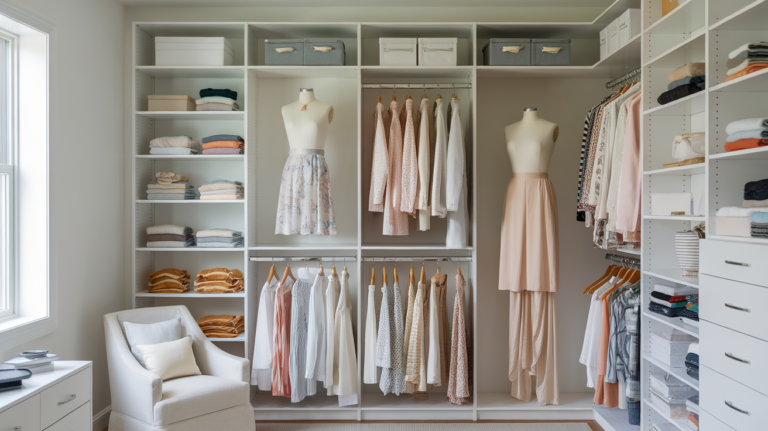
23 Coat Closet Organization Ideas That Keep Everything Neat and Easy to Find
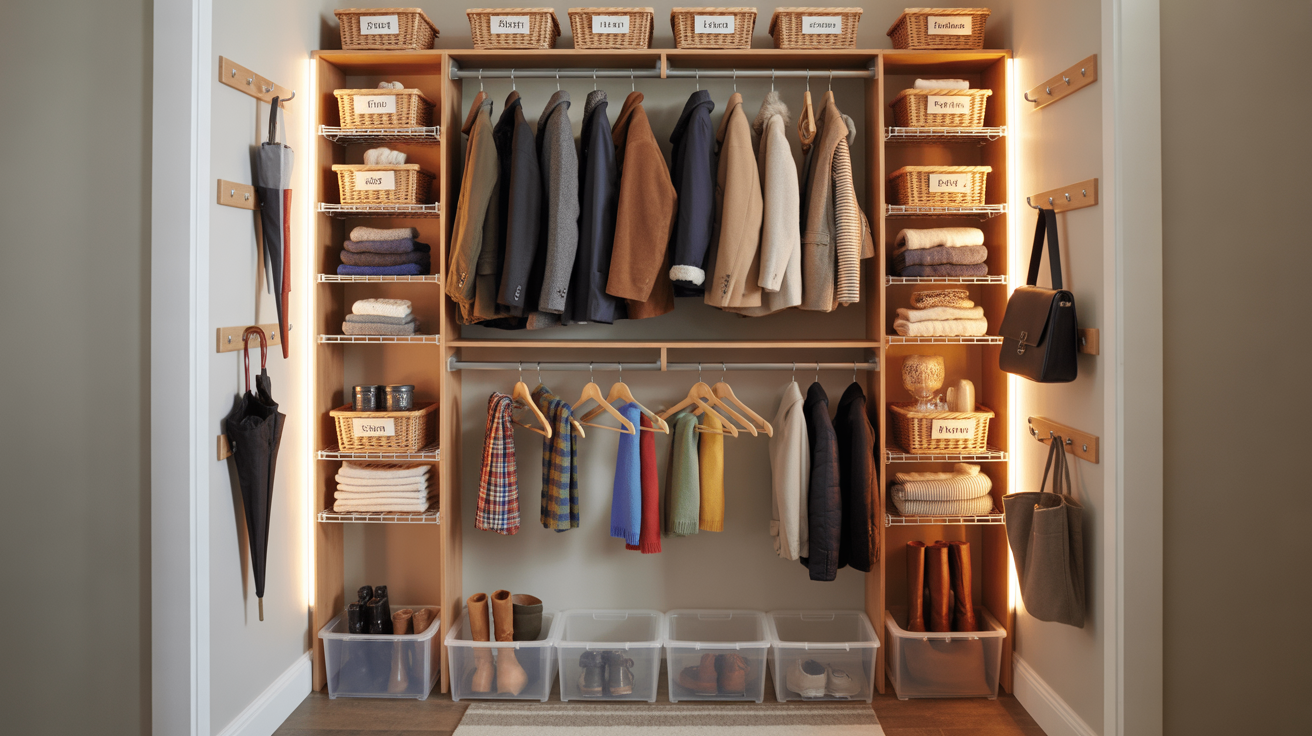
Let’s be honest—coat closets have a personality, and it’s usually chaotic. One minute you’re calmly grabbing a jacket, the next you’re buried under scarves you forgot you owned, a rogue umbrella poking your eye, and shoes falling like dominoes.
Trust me, I’ve stood there thinking, How did it get this bad again? Ever noticed how coat closets somehow become the dumping ground for literally everything? Here’s the thing: organizing one doesn’t have to feel like a punishment.
I’ve messed this up way too many times, learned the hard way, and picked up some surprisingly simple tricks that actually work. Let’s talk through them like two people bonding over shared closet trauma.
1. Start With a Brutally Honest Purge
Before buying bins or hooks, you’ve got to face the truth. If you haven’t worn that coat in three winters, it’s probably not coming back into your life, and I say this as someone who clings to “just in case” items like they’re emotional support jackets.
Pull everything out, yes everything, and ask yourself if it still earns its space. It’s annoying, it takes time, and you’ll second-guess yourself—but this step alone changes everything. FYI, the closet can’t magically organize clutter you refuse to let go of. I’ve learned that the hard way.
2. Assign Zones Like You Mean It
Ever wondered why coat closets feel messy even when they’re not full? It’s usually because everything lives everywhere. Create clear zones—coats in one area, shoes below, accessories off to the side—so your brain knows where things belong.
IMO, this is less about perfection and more about reducing decision fatigue when you’re already late. When each item has a “home,” it’s easier to put things back instead of tossing them in like future-you will deal with it. Spoiler: future-you never does.
3. Use Slim, Matching Hangers
This sounds boring, but wow does it matter. Bulky hangers eat up space fast, and mismatched ones make everything look messier than it actually is. Switching to slim hangers instantly creates breathing room and makes the closet feel calmer, honestly.
I used to think this was an aesthetic-only tip, but nope—it’s practical too. You can fit more coats without that overstuffed look, and nothing slides off onto the floor anymore. Small change, big payoff.
4. Double Up With a Second Hanging Rod
If your closet has the height, use it. Adding a second rod lets you separate short jackets from long coats, which is way more efficient than cramming everything on one bar.
I avoided this for years because it felt “extra,” but now I’m mad I waited so long. It’s especially helpful if multiple people use the same closet and things get mixed fast. Plus, it makes the whole setup feel intentional instead of accidental.
5. Add Hooks for Everyday Items
Hooks are the unsung heroes of coat closets. For the stuff you grab daily—keys, dog leash, favorite jacket—hooks make life easier and faster.
I used to hang everything, which meant digging every single time I needed something quickly.
With hooks, there’s zero effort and way less mess. Tbh, if something is used constantly, it deserves a hook, not a hanger.
6. Install Shelf Dividers
Shelves are great until everything turns into one big leaning pile. Shelf dividers keep hats, scarves, and folded items upright and visible instead of collapsing into chaos.
I can’t tell you how many times I forgot what I owned because it was buried in a soft fabric avalanche. Dividers fix that without needing fancy containers. It’s one of those “why didn’t I do this sooner?” upgrades.
7. Use Clear Bins for Accessories
Clear bins are clutch because you can actually see what’s inside without opening five lids. Scarves, gloves, earmuffs—all those small things finally stay together instead of scattering.
I used to toss them on a shelf loose, and shockingly, that didn’t work. Clear bins make it obvious when you have three black scarves already, which might stop you from buying a fourth. Might.
8. Label Everything (Yes, Really)
I know, labeling sounds intense, but hear me out. Labels remove guesswork, especially in shared households where everyone has a different idea of “where things go.”
When it’s labeled, it’s clear, and people are more likely to follow the system. I resisted this forever, thinking I’d remember—but I didn’t. Ever wondered why systems fall apart? Usually because nothing is clearly defined.
9. Rotate Seasonal Coats
Not every coat needs prime real estate all year. Off-season coats should be stored higher up or in bins so everyday items stay accessible. This alone makes the closet feel lighter and easier to use.
I used to leave everything out “just in case,” which only made mornings more stressful. Rotating seasonally is practical, not precious.
10. Add a Shoe Tray or Rack
Shoes on the floor without structure turn messy fast, especially when they’re wet. A tray keeps dirt contained, while a rack uses vertical space better. I’ve ruined more than one pair of shoes by letting them pile up damp.
This small boundary makes a big difference in cleanliness and smell. Your future self will thank you.
11. Use Door Space Wisely
The back of the closet door is prime real estate that often gets ignored. Over-the-door organizers can hold scarves, gloves, or even small bags. I ignored this space for years, and honestly, that was a mistake.
It’s perfect for lightweight items you want visible and reachable. Just don’t overload it or the door becomes a workout.
12. Store Bags Inside Bags
This one felt weird at first, but it works. Smaller bags go inside larger ones to save space and keep straps from tangling. I used to shove bags wherever they fit, which meant creases and chaos.
Nesting them keeps their shape and makes the closet feel calmer. It’s oddly satisfying once you try it.
13. Add a Catch-All Basket
Every closet needs a “miscellaneous but intentional” spot. A basket for sunglasses, mail, or random daily items prevents clutter from spreading.
I’ve learned that pretending random items don’t exist doesn’t make them disappear. A catch-all basket gives them a home without ruining the system. Controlled chaos is still control.
14. Use Non-Slip Shelf Liners
This is a tiny detail that saves so much frustration. Shelf liners keep stacks from sliding and protect surfaces from moisture.
I skipped this step once and paid for it with toppled piles weekly. It’s cheap, easy, and quietly effective. Sometimes the boring solutions are the best ones.
15. Keep an “Outgoing” Bin
If something is headed to donation or repair, don’t put it back in rotation. An outgoing bin keeps items from sneaking back into the closet. I’ve absolutely rehung things meant for donation out of laziness.
This bin stops that cycle and keeps clutter from returning. Boundaries matter—even with stuff.
16. Separate Adult and Kid Zones
If kids use the same closet, give them a lower, clearly defined section. When they can reach their own hooks or bins, things actually get put away. Shocking, I know.
I’ve seen closets improve instantly just by lowering expectations and shelves. Accessibility changes behavior.
17. Use Uniform Storage Containers
Matching bins create visual calm, even if what’s inside isn’t perfect. I used to mix whatever containers I had, and it always felt messy.
Uniform storage makes the closet look organized even on lazy weeks. It’s not about being fancy—it’s about reducing visual noise.
18. Install a Small Light
Closets are often dark, which makes everything harder. A battery-operated light can completely change how usable the space feels.
I avoided this because it felt unnecessary, but wow was I wrong. When you can actually see, you’re more likely to stay organized. Simple, but effective.
19. Keep Daily Coats Front and Center
The coats you wear all the time shouldn’t be buried. Place them in the most accessible spot so mornings are smoother.
I used to dig past three unused jackets to find my favorite one—why? Prioritizing daily items saves time and patience. Honestly, it’s just being kind to yourself.
20. Use Vertical Space Above the Door
That high shelf above the door? Perfect for rarely used items. Storage bins up there keep clutter out of sight but still accessible.
I ignored this space for years because it felt awkward to reach. A small step stool fixes that instantly.
21. Don’t Overstuff—Leave Breathing Room
An overpacked closet never stays organized. Leaving some empty space makes it easier to put things back where they belong.
I know it’s tempting to fill every inch, but trust me, restraint helps. Ever noticed how things fall apart faster when everything’s jammed in? Exactly.
22. Do a Monthly Mini Reset
You don’t need a full overhaul every time. A five-minute monthly reset keeps things from spiraling. I set a reminder because I will forget otherwise.
This habit alone keeps the system working long-term. Maintenance beats burnout every time.
23. Design It for Real Life, Not Perfection
Here’s the thing: your closet should work for you, not some imaginary ideal. If a system feels annoying, you won’t use it, and I’ve learned that the hard way.
Build around your habits, even the messy ones. Organization that fits real life actually sticks.
Final Thoughts
At the end of the day, organizing a coat closet isn’t about having a picture-perfect space. It’s about making daily life a little easier and a lot less frustrating. I’ve failed at this enough times to know that simple, realistic systems always win.
If you take anything from this, let it be this: start small, be honest with yourself, and don’t aim for perfection. Your coat closet doesn’t need to impress anyone—it just needs to work. And honestly, once it does, you’ll wonder how you ever lived without it.