25 Rock Garden Landscaping Ideas: Stunning Designs to Transform Your Yard
Are you looking to transform your outdoor space into something truly unique and eye-catching? Rock gardens offer a perfect blend of natural beauty and low-maintenance landscaping that can elevate your yard instantly.
Whether you want to add texture, color, or a touch of rugged charm, the right arrangement of stones and plants can make all the difference. You’ll discover 25 rock garden landscaping ideas that are easy to create and will inspire you to bring new life to your garden.
Ready to make your garden stand out and enjoy a peaceful retreat right at home? Let’s dive in!
Rock Garden Basics
Choosing the right rocks sets the base for a great rock garden. Use a mix of sizes and shapes for a natural look. Large rocks create focal points, while small pebbles fill gaps and add texture. Avoid rocks that are too smooth or shiny; rough surfaces hold soil better.
Selecting suitable plants means picking those that thrive in rocky, dry soil. Succulents, alpine flowers, and ornamental grasses work well. Choose plants that stay low and spread slowly to prevent overcrowding. Colorful blooms add life and contrast to the stones.
Soil and drainage tips are key for plant health. Use sandy or gravelly soil to improve drainage. Avoid heavy clay soil that holds water. Place rocks to guide water flow away from roots. Good drainage stops plants from rotting and keeps your garden healthy.
Design Styles
Modern Minimalist style uses clean lines and few elements. Rocks are often smooth and neutral in color. Plants are simple, like succulents or grasses. The goal is to keep the space open and calm.
Natural and Rustic design feels wild and organic. Use rough stones and mix various sizes. Add native plants that grow easily. The look is relaxed and blends with the environment.
Zen and Asian-Inspired gardens focus on balance and peace. Use sand, gravel, and carefully placed rocks. Include small trees or bamboo. Water features and lanterns add calmness.
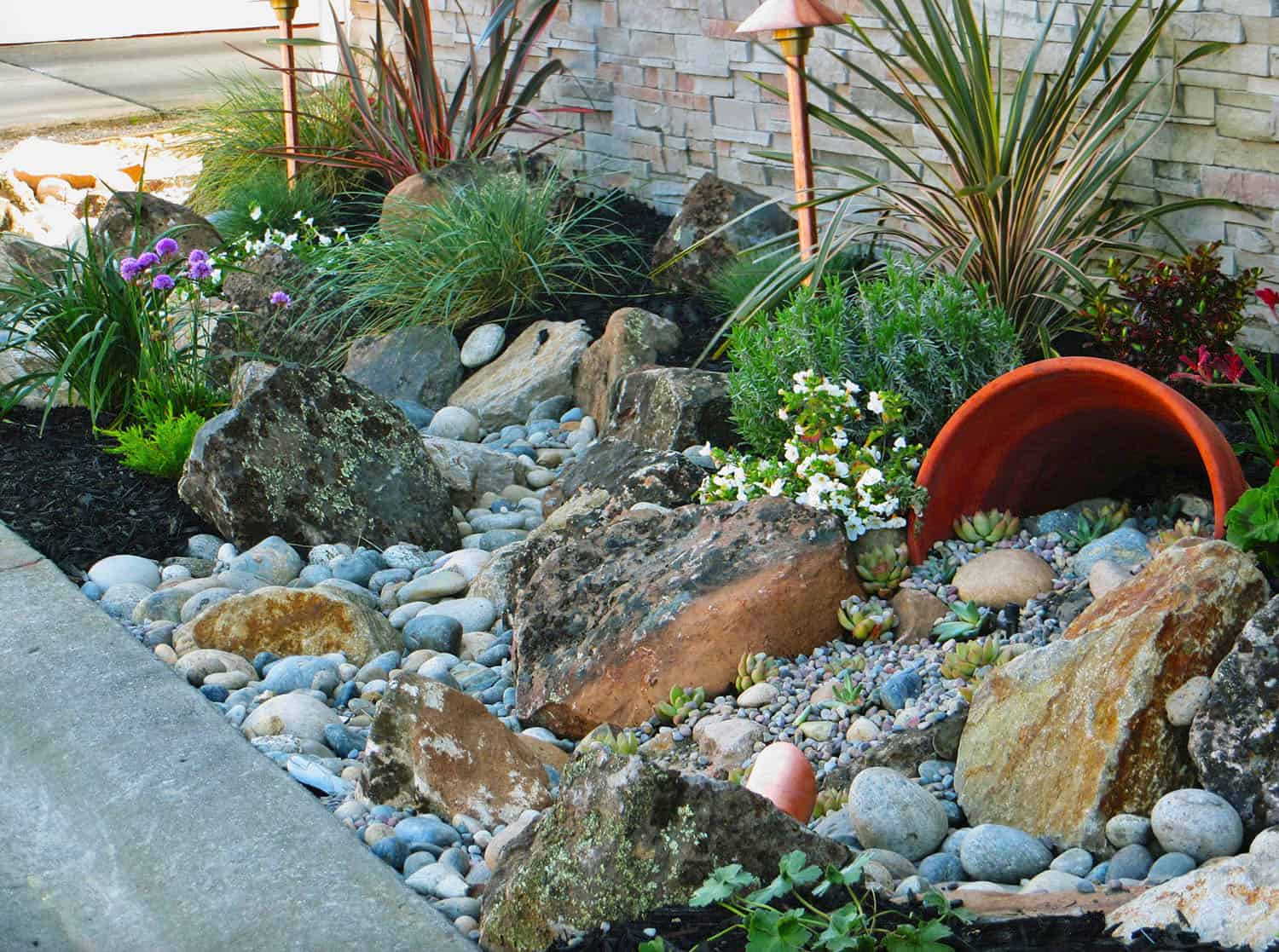
Mediterranean Vibes bring warmth and color. Combine terracotta pots with bright flowers. Use pebbles with warm tones like reds and browns. Olive trees or lavender work well here.
Plant Ideas For Rock Gardens
Succulents and cacti are perfect for rock gardens. They need little water and grow well in rocky soil. Their thick leaves store water, making them very tough. Colors range from green to purple, adding interest and texture.
Alpine flowers thrive in cool, rocky places. These small, bright blooms add color without needing much care. They grow low to the ground and spread nicely among stones.
Ornamental grasses bring movement and softness to hard rocks. Their fine blades contrast well with rough stones. They can survive dry conditions and add height to the garden.
Low-growing shrubs provide structure and green cover. These plants stay close to the ground and fill gaps between rocks. Many are evergreen, keeping the garden lively all year.
Credit: onekindesign.com
Creative Layouts
Layered rock arrangements add depth and texture to gardens. Place larger rocks at the bottom and smaller ones on top. This creates a natural, terraced look that is easy to maintain. Using different rock sizes and shapes makes the garden visually interesting.
Pathway and walkway borders made with rocks guide visitors and define garden spaces. Choose smooth stones for a clean edge or rougher boulders for a rustic feel. This method keeps soil and mulch in place while adding charm.
Boulder focal points create strong visual interest. Place large boulders in strategic spots to draw the eye. Surround them with smaller rocks or plants to balance the scene. They can also serve as natural seating areas.
Mixed pebble and gravel patterns bring variety and contrast. Combine different colors and sizes to form shapes or simple designs. This technique works well in dry areas and reduces the need for watering.
Water-wise Techniques
Drought-tolerant plants like succulents, lavender, and ornamental grasses thrive in rock gardens. These plants need little water and survive hot, dry weather well. Using such plants saves water and keeps your garden green with less effort.
Mulching with stones helps keep soil moist and reduces evaporation. Spread gravel or small rocks around plants to protect roots from heat. This method also prevents weeds and adds a clean, natural look to your garden.
| Efficient Irrigation Options | Benefits |
|---|---|
| Drip Irrigation | Delivers water directly to roots, reduces waste |
| Soaker Hoses | Slow water release, ideal for rock gardens |
| Rainwater Harvesting | Uses natural water, eco-friendly and cost-saving |

Credit: www.youtube.com
Seasonal Color And Texture
Flowering plants bring color and life throughout the year. Choose species that bloom in different seasons to keep your rock garden vibrant. Early spring bulbs like crocus and daffodils brighten cold months, while summer blooms such as lavender and sedum add warmth. In fall, asters and chrysanthemums provide rich hues.
Varying foliage textures creates depth and interest. Combine plants with different leaf shapes and colors, such as spiky yuccas, soft ferns, and silver-gray sage. This diversity keeps your garden appealing even when flowers fade.
Moss and lichens add a natural, aged look to rocks. They thrive in shady, moist areas, softening hard surfaces. These low-maintenance plants improve texture and help retain moisture in your garden soil.
Maintenance Tips
Weed control keeps your rock garden tidy and healthy. Pull weeds regularly to stop them from spreading. Use mulch or landscape fabric under rocks to block weed growth. Avoid chemical herbicides near delicate plants.
For pruning and plant care, trim dead leaves and stems often. This helps plants grow strong and look neat. Water plants based on their needs—some need less water in rock gardens. Remove any diseased parts quickly to protect other plants.
Rock cleaning and upkeep improves the garden’s look. Brush dirt and moss off rocks gently with a soft brush. Rinse rocks with water to remove dust. Check rocks for cracks or damage and replace if needed. Keep pathways clear for easy walking.
Common Mistakes To Avoid
Overcrowding plants in a rock garden can harm their growth. Each plant needs enough space to get sunlight and air. Crowded plants compete for nutrients and water. This can make them weak and less healthy.
Poor drainage is a big problem. Rocks can trap water, causing roots to rot. Make sure soil drains well by adding gravel or sand below the soil. This keeps roots dry and healthy.
Ignoring scale and proportion can ruin the look. Large rocks should match plant size. Small plants look lost near huge stones. Balance helps the garden look natural and pleasing.
Inspiration From Real Gardens
Small yards can look larger with smart rock garden ideas. Use rocks and pebbles to make paths or borders. Choose low plants like succulents that need little water. This keeps the garden simple and neat.
Front yard rock gardens add charm and curb appeal. Place stones around flower beds or near the porch. Mix different sizes and colors of rocks for interest. Add evergreen shrubs for year-round green.
Backyard retreats become peaceful with natural rock settings. Create small seating areas with flat stones. Use gravel for walkways and add tall grasses for softness. These elements invite relaxation and quiet time.
Urban rock garden solutions fit small city spaces. Use containers filled with rocks and drought-tolerant plants. Vertical rock walls or small rock piles save space. These ideas bring nature into tight spots.
Diy Rock Garden Projects
Building rock borders helps define garden spaces clearly. Use large stones or bricks to line flower beds or paths. This creates a neat, tidy look while keeping soil and mulch in place.
Creating pebble mosaics adds fun and color to your garden. Arrange small, smooth pebbles in patterns or shapes on flat surfaces. This art form is easy and brings a unique touch to your outdoor space.
Installing rock water features brings calm and beauty. Use rocks to build fountains, small waterfalls, or ponds. The sound of flowing water soothes the mind and attracts birds and butterflies.
:strip_icc()/rock-fountain-plants2-E4SyAcg348j93ZRiLQngFG-3678b97abedc46baa43e8d99a9173435.jpg)
Credit: www.bhg.com
Frequently Asked Questions
What Is The 70 30 Garden Rule?
The 70 30 garden rule divides garden space into 70% plants and 30% hardscape or empty space for balance and aesthetics.
What Is The Rule Of 3 In Landscaping?
The rule of 3 in landscaping groups plants or elements in odd numbers, usually three, for visual balance and interest. It creates natural, appealing compositions that draw attention and avoid uniformity. This technique enhances garden design by adding rhythm and harmony.
What Looks Good In A Rock Garden?
Succulents, alpine flowers, ornamental grasses, low-growing evergreens, and drought-tolerant plants look great in rock gardens. Use various stone sizes for texture and depth.
What Are Common Rock Design Mistakes To Avoid?
Common rock design mistakes include overcrowding stones, ignoring scale, poor plant selection, lack of balance, and neglecting proper drainage. Avoid these to create a visually appealing, functional rock garden.
Conclusion
Rock gardens bring natural beauty with low care needs. Use stones of different sizes to add texture and interest. Pair rocks with drought-tolerant plants like succulents or grasses. Choose designs that fit your space and style. Experiment with shapes, colors, and plant types for variety.
These ideas can inspire your own creative landscaping project. Enjoy a peaceful, attractive garden that lasts through seasons. Start small and build your perfect rock garden step by step.