24 Styling Kitchen Shelves Ideas That Instantly Elevate Your Kitchen Look
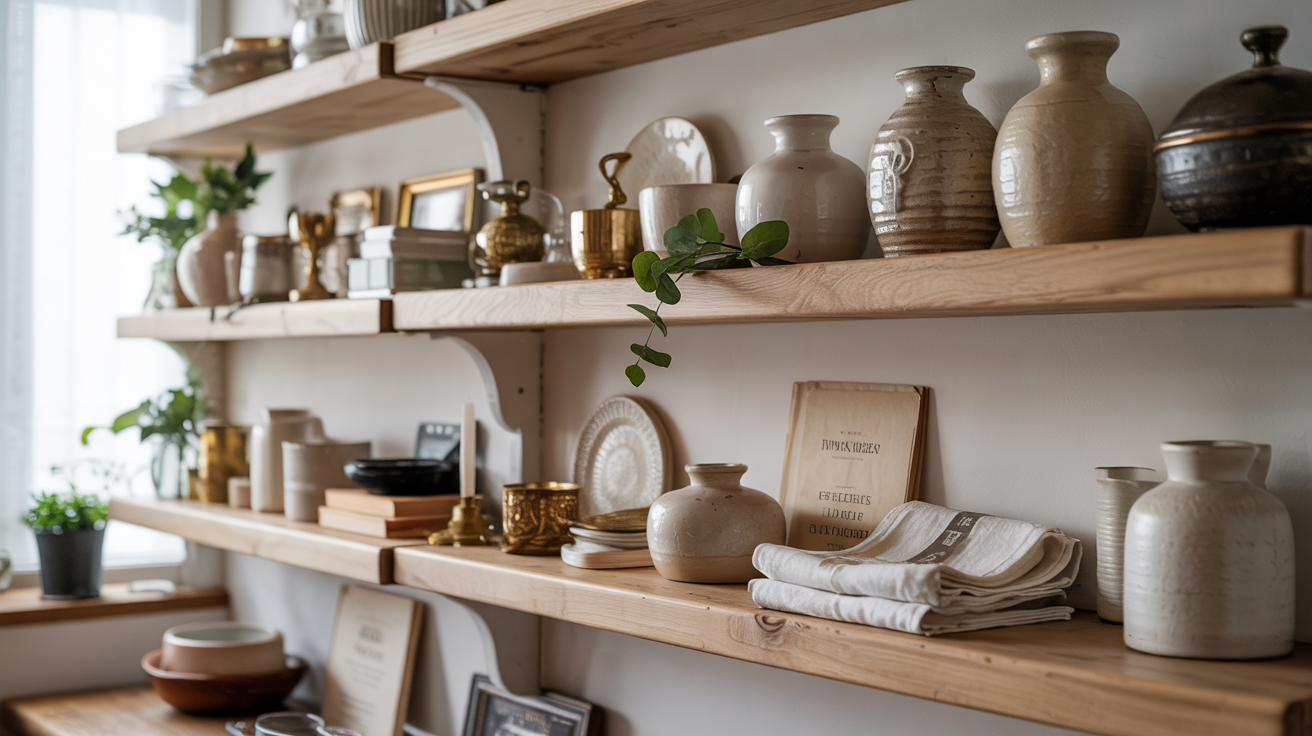
Let’s be honest, open kitchen shelves look amazing on Instagram, but in real life? They can turn into a chaotic mix of random mugs, dusty bowls, and that one weird plate you never actually use.
Trust me, I’ve stared at my shelves thinking, “Why does this look effortless in photos but stressful in my kitchen?” Ever noticed how shelves somehow magnify clutter? Here’s the thing—styling kitchen shelves isn’t about perfection or buying expensive décor.
It’s about intention, balance, and a little trial-and-error (which I’ve done way too many times). Let me walk you through what actually works, minus the fluff and plus a few hard-earned lessons.
1. Start With a Clean Slate (Yes, Everything Off)
I know, it sounds obvious, but honestly, this step gets skipped way too often. Take everything off the shelves—even the stuff you “definitely want to keep there.”
Ever wondered why shelves feel messy even when they’re organized? It’s usually because you’re rearranging clutter instead of curating.
Starting fresh helps you see the space clearly and stops you from emotionally clinging to that chipped mug. FYI, this also makes you realize how much stuff you actually don’t need up there.
2. Stick to a Loose Color Palette
Here’s the thing: shelves look calmer when colors don’t fight each other. IMO, choosing two to three main colors makes everything feel intentional, even if the items themselves are simple.
I usually pick neutrals like white, wood, or black, then add one soft accent. I’ve done the rainbow shelf thing before, and tbh, it looked like a thrift store aisle. A consistent palette makes even everyday dishes feel styled, not stored.
3. Mix Practical Items With Decorative Ones
If your shelves are only decorative, they’ll feel staged and kind of useless. If they’re only practical, they’ll feel messy. The sweet spot is mixing both.
I like placing plates and bowls next to a plant or small framed print. It feels lived-in, like someone actually cooks here, not like a showroom kitchen that’s afraid of fingerprints.
4. Vary Heights to Avoid the Flat Look
Ever noticed shelves that feel boring even though the items are nice? That’s usually a height issue. When everything is the same size, your eyes get bored fast.
Stack plates low, stand cutting boards tall, and let vases or bottles rise above the rest. I’ve ignored this before, and my shelves looked weirdly stiff—like they were standing at attention.
5. Use Odd Numbers (It’s a Real Thing)
This sounds fake, but it works. Grouping items in odd numbers—three bowls, five glasses—just looks better. Ever wondered why? No idea, but our brains love it.
I used to line things up in perfect pairs, thinking I was being neat. Nope. Odd-number groupings feel relaxed and natural, like they weren’t overthought (even though they totally were).
6. Add Something Organic
Shelves need softness, and organic elements do that effortlessly. Think plants, wooden bowls, woven baskets, or even a stone mortar and pestle.
I once styled shelves with only ceramic and glass, and honestly, it felt cold. Adding something natural instantly warmed things up and made the space feel more human. Plus, plants forgive a lot of styling sins.
7. Let Some Items Breathe
Not every inch of shelf space needs to be filled. I’ve definitely overcrowded shelves thinking “more is more.” Spoiler: it’s not.
Leaving some empty space helps your favorite pieces stand out. Negative space isn’t wasted space—it’s visual relief, especially in a busy kitchen.
8. Use Stacks Instead of Rows
Rows feel stiff. Stacks feel cozy. Stack plates, bowls, or even cookbooks horizontally to break up the lines.
I resisted this for a long time because I thought stacks looked messy. Turns out, neat stacks actually make shelves feel intentional and layered, not cluttered.
9. Bring in a Personal Touch
This is where shelves go from “nice” to “yours.” Add something personal—a handwritten recipe card, a travel souvenir, or a photo in a simple frame.
I’ve added a tiny bowl from a local market, and it always gets noticed. Personal items tell a story, and honestly, kitchens should feel personal.
10. Use Cookbooks as Styling Tools
Cookbooks aren’t just for cooking. Stack a few horizontally or stand them vertically as bookends. Choose covers you actually like looking at (this matters more than you think).
I used to hide my cookbooks in cabinets, and now they’re basically shelf décor that also happens to be useful.
11. Play With Texture, Not Just Color
Texture is the secret weapon people forget. Smooth ceramics, rough wood, glossy glass—it all adds depth. Ever wondered why neutral shelves sometimes still look interesting? Texture.
I’ve styled shelves with all-white items that looked amazing simply because the textures varied enough to keep things visually interesting.
12. Don’t Overdo Symmetry
Perfect symmetry can feel a little… uptight. Balance is good, but mirror-image shelves can feel forced.
I like letting one side feel slightly heavier or more layered than the other. It feels more relaxed, like the kitchen evolved naturally instead of being styled in one stressful afternoon.
13. Rotate Items Seasonally
You don’t have to commit forever. I swap items seasonally—lighter ceramics in summer, darker tones in winter.
It keeps things feeling fresh without buying new stuff constantly. Honestly, just rotating what you already own makes your kitchen feel updated.
14. Use Trays to Create Mini Zones
Trays aren’t just for counters. A small tray on a shelf can group oils, salt, and pepper into one tidy moment.
I’ve done this when shelves felt chaotic, and it instantly created order. Think of trays as visual containers that tell your eyes, “This is one thing.”
15. Add One Unexpected Item
This is where personality sneaks in. Something slightly unexpected—a sculptural object, a vintage piece, or even a quirky container.
I once added an old ceramic lemon juicer just because it looked cool. People notice these little surprises, and they make shelves feel less predictable.
16. Keep Everyday Items Within Reach
Styling shouldn’t make your kitchen less functional. Put everyday dishes on lower shelves and decorative items higher up.
I’ve made the mistake of styling everything beautifully, then getting annoyed every morning reaching for my mug. Function first, always.
17. Repeat Materials for Cohesion
Repeating materials helps shelves feel intentional. If you use wood in one spot, echo it elsewhere. Same with metal or ceramic.
I didn’t get this at first, but once I started repeating materials, everything suddenly felt like it belonged together.
18. Use Neutral Dishes as Your Base
Neutral dishes are shelf MVPs. White, cream, or light gray plates go with everything and never look messy.
I mix in patterned pieces, but neutrals do most of the heavy lifting. They’re basically the jeans-and-tee of kitchen styling.
19. Lean Items Instead of Hanging Everything
Leaning cutting boards or framed art against the wall adds a casual vibe. Not everything needs to be mounted or perfectly centered.
I leaned a small frame once out of laziness, and it ended up looking intentional. Happy accident.
20. Edit Ruthlessly (Yes, Again)
After styling, walk away. Come back later and remove one or two items. I promise it’ll look better.
Ever wondered why shelves feel “almost right”? Usually, there’s just one thing too many. Editing is uncomfortable but necessary.
21. Use Matching Containers for Small Items
Small items can get visually noisy fast. Matching jars or containers calm everything down.
I switched mismatched spice jars to simple glass ones, and suddenly the shelf felt styled instead of chaotic. Consistency really does the heavy lifting here.
22. Think in Layers, Not Lines
Place items slightly in front of each other to create depth. Flat, single-file shelves feel boring. Layering makes shelves feel fuller without being crowded.
I used to line everything up perfectly, and honestly, it looked kind of sad.
23. Let One Shelf Be Simple
Not every shelf needs to work hard. Let one shelf be quieter—fewer items, simpler shapes.
It gives your eyes a break and makes the styled shelves stand out more. Sometimes restraint is the most stylish move.
24. Accept That Perfection Is a Myth
Here’s the real talk: shelves will never look perfect all the time. Things move, dishes get used, life happens.
I’ve learned to embrace a little imperfection because it means the kitchen is actually being lived in. Styled doesn’t mean untouchable.
Final Thoughts
If there’s one thing I’ve learned, it’s that styling kitchen shelves is less about rules and more about paying attention. Paying attention to what you use, what you love, and what actually makes your kitchen feel good to be in.
You don’t need fancy stuff or a designer budget—just a bit of intention and patience.
Honestly, give yourself permission to experiment. Move things around, live with it, change it again. I’ve done this way too many times, and that’s kind of the point.
Your kitchen should feel like you, not a catalog page.
So take a breath, trust your instincts, and remember—if it makes you smile when you walk into the kitchen, you’re doing it right.