21 Office Guest Room Combo Ideas That Maximize Space and Function
I know how tricky it can feel when you’re trying to make one room do two important jobs. I’ve been there wanting a calm, stylish home office for everyday work, but also needing a cozy guest room that doesn’t feel like an afterthought.
If you’re like me (and most women I know), you want the space to be practical and beautiful, not just a fold-out bed stuck in a corner.
The good news is, you really don’t have to choose between function and comfort. With the right ideas, you can create an office guest room combo that feels intentional, organized, and welcoming.
I’m going to share ideas I’ve personally tried, loved, or learned from real homes so you can avoid common mistakes and build a space you’ll actually enjoy using.
1. Use a Sofa Bed as the Main Feature
This is honestly the first thing I recommend to anyone. A sofa bed instantly makes the room feel like a proper office during the day and a real bedroom at night.
I love how modern sofa beds don’t even look like beds anymore they feel stylish and intentional.
You can sit comfortably while working, reading, or having coffee, and your guests still get a proper sleeping surface. It’s one of the easiest ways to keep both functions balanced without clutter.
2. Choose a Daybed for a Soft, Feminine Look
If you want something a little lighter and more elegant, a daybed is perfect. I personally love daybeds because they feel cozy and decorative, not bulky or heavy.
They look beautiful with cushions and throws and can easily pass as a lounge sofa. When guests arrive, it already feels like a bed, so there’s no awkward transformation. It’s great if your style leans more soft, minimal, or feminine.
3. Install a Murphy Bed for Maximum Floor Space
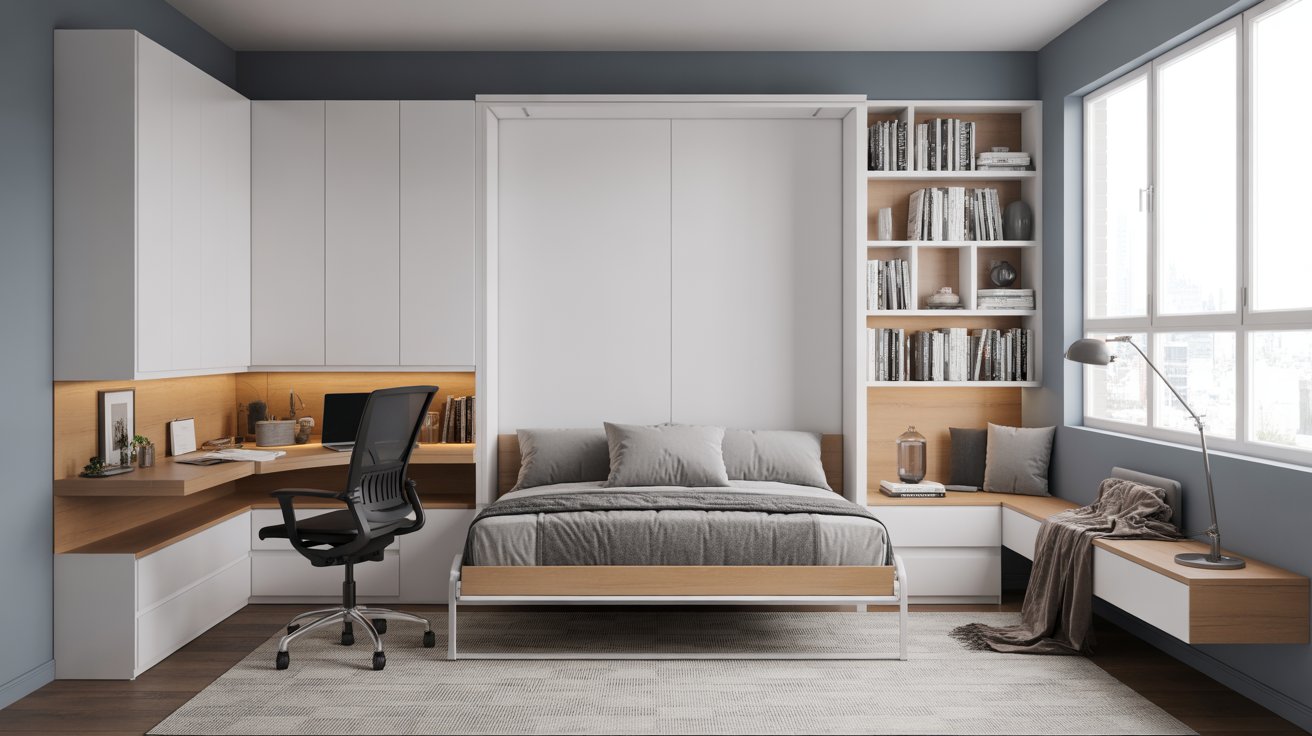
Murphy beds are a lifesaver for small rooms. I’ve seen them transform tiny spaces into fully functional offices that don’t feel cramped at all.
When the bed is folded up, the room looks like a normal office with clean walls and open space.
At night, it turns into a guest room without any effort. If you work from home daily, this option keeps the room from feeling like a bedroom all the time.
4. Use a Desk That Doubles as a Vanity
This is one of my favorite ideas, especially for women. A desk that also works as a vanity adds a personal, lifestyle touch to the room.
You can work during the day and use the same space for skincare, makeup, or journaling in the evening.
It makes the room feel less “corporate” and more like a lived-in personal space. Your guests will also appreciate having a pretty surface to use.
5. Add Built-In Storage Around the Bed
Built-in shelves and cabinets are such a smart way to save space. I love how they make everything feel custom and organized. You can store office supplies, guest bedding, books, and decor all in one place.
It keeps the room clutter-free, which is essential when one space serves two roles. Plus, it makes the room look more high-end and thoughtfully designed.
6. Keep a Neutral and Calm Color Palette
From my experience, neutral colors work best for dual-purpose rooms. Soft whites, beige, greige, or light grey make the space feel bigger and calmer.
They don’t overwhelm either function and make it easy to add decor without chaos.
A calm palette also feels more welcoming for guests and more focused for work. It’s a simple trick, but it makes a huge difference emotionally.
7. Use a Foldable Desk for Flexibility
If the room is really small, a foldable desk is incredibly practical.
You can open it when you need to work and close it when guests come. I like this idea because it gives you control over the layout.
The room can shift depending on your needs, instead of being stuck in one setup. It’s perfect if you only work occasionally from that space.
8. Place the Desk Near the Window
Natural light changes everything. I always suggest placing your desk near the window if possible. It improves your mood, helps with focus, and makes the space feel more open.
At the same time, your guests will enjoy waking up to natural light too. It’s one of those layout decisions that benefits both functions equally.
9. Use a Room Divider for Privacy
Sometimes you want mental separation between work and rest. A room divider can help create that. It doesn’t have to be permanent folding screens, curtains, or even open shelving work beautifully.
I love this idea because it gives emotional boundaries too. When I hide the bed, I feel more productive. When I hide the desk, I feel more relaxed.
10. Choose Multi-Functional Furniture
This is a golden rule for any combo room. Ottomans with storage, side tables with drawers, benches that open up these pieces work overtime. I’ve learned that every item in this room should earn its place.
If it doesn’t serve at least two purposes, it probably doesn’t belong here. This mindset keeps the room efficient and clutter-free.
11. Create a Cozy Guest Corner
Even in an office, your guest should feel thought of. I like adding a small corner with a lamp, a plant, and maybe a tray with water or books. It’s a simple gesture, but it changes how welcoming the room feels.
Your guests won’t feel like they’re sleeping in your workspace they’ll feel like they have their own little retreat.
12. Hide Office Supplies in Closed Storage
Nothing ruins a guest room vibe faster than visible paperwork and cables. I always recommend closed storage like cabinets or drawers.
You can quickly hide everything when guests arrive. It keeps the space visually calm and prevents that “working environment” feeling. Trust me, this one detail makes the room feel ten times more relaxing.
13. Use Soft Lighting Instead of Harsh Lights
Lighting plays a huge role in how the room feels. For work, you need enough light to focus. But for guests, harsh lighting feels uncomfortable.
I prefer layered lighting desk lamp, floor lamp, and soft overhead light. This way, you can adjust the mood depending on whether you’re working or hosting.
14. Add Feminine Touches Through Decor
Since most readers are women, I know you care about how the room feels, not just how it works. Soft cushions, neutral curtains, warm rugs, and minimal art make the space feel gentle and personal.
These touches prevent the room from looking like a plain office. It should feel like part of your home, not a workspace you tolerate.
15. Use Floating Shelves Instead of Heavy Cabinets
Floating shelves save floor space and keep the room visually light. I love using them for books, plants, candles, and small storage baskets.
They give personality without making the room feel crowded. Plus, they’re great for keeping essentials within reach while still looking decorative.
16. Keep the Bed Simple and Minimal
In a combo room, a big heavy bed can overpower everything. I prefer low-profile beds with clean lines. They blend better with office furniture and don’t dominate the space.
A simple bed makes it easier to style the room for both functions without visual conflict.
17. Use a Rug to Define Each Zone
Rugs are amazing for zoning. You can place one under the desk area and another near the bed. It subtly separates the space without walls.
I’ve found this especially helpful for small rooms because it creates structure while keeping the layout open and breathable.
18. Add Mirrors to Make the Room Feel Bigger
Mirrors reflect light and make any room feel more open. I love placing a mirror near the desk or opposite the window.
It brightens the space and adds a lifestyle touch for guests too. It’s functional, decorative, and space-enhancing all at once.
19. Choose Lightweight Furniture
Heavy furniture makes small rooms feel cramped. I prefer slim desks, light chairs, and airy shelving.
This keeps the room flexible and easy to rearrange. When you want to switch from office mode to guest mode, it shouldn’t feel like a workout.
20. Store Guest Essentials in One Basket
I always keep extra pillows, blankets, and towels in one dedicated basket or box. This makes hosting effortless.
You’re not running around the house when guests arrive. Everything is already in the room, and it feels intentional instead of improvised.
21. Design With Your Lifestyle in Mind
This is the most important tip of all. Your room should reflect how you actually live. If you work daily, prioritize the office setup. If you host often, prioritize the bed and comfort. I’ve learned that the best designs are not about trends—they’re about real habits and needs.
Conclusion
An office guest room combo doesn’t have to feel stressful or complicated. With the right layout, furniture, and mindset, you can create a space that supports your work life and your home life at the same time.
I truly believe this kind of room is one of the smartest upgrades you can makeespecially if space is limited but expectations are high.
You deserve a room that feels organized, beautiful, and emotionally comfortable. And once you get it right, you’ll wonder how you ever lived without it.
FAQs
1. Can a small room really work as both office and guest room?
Yes, absolutely. I’ve seen very small rooms work beautifully with the right furniture like sofa beds, foldable desks, and smart storage.
2. What is the best bed option for an office guest room?
In my experience, sofa beds and Murphy beds are the most practical because they save space and look stylish.
3. How do I make the room feel cozy for guests?
Use soft lighting, clean bedding, neutral colors, and small personal touches like cushions, plants, and books.
4. How do I hide office clutter when guests come?
Closed storage is the key. Cabinets, drawers, and boxes allow you to hide everything quickly.
5. Should I prioritize office or guest function?
It depends on your lifestyle. I always suggest prioritizing the function you use most, then designing the second role around it.